This article provides a concise overview of the Lithuanian food and beverage market, covering recent economic indicators, the structure of the retail sector, and evolving consumer preferences. From key players in grocery distribution to emerging trends in health-conscious buying, the aim is to offer practical insights for producers evaluating their entry or expansion strategy.
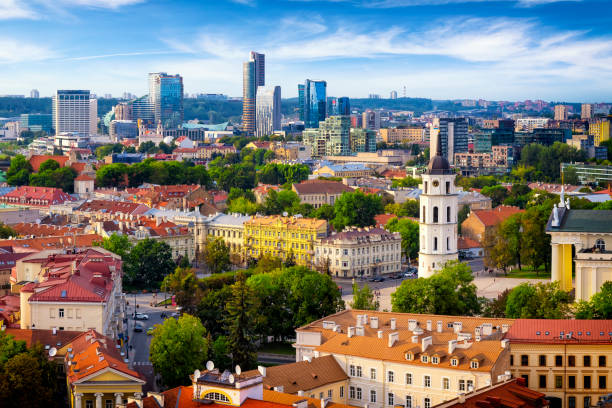
1. General Overview of Lithuania
Lithuania is a dynamic EU and Eurozone member positioned at the crossroads of Northern and Eastern Europe. Known for its pro-business environment, low corporate tax rates, and advanced digital infrastructure, Lithuania offers an attractive landscape for international investors and partners. Its consistent economic growth, strong industrial base, and focus on innovation make it a standout choice in the Baltic region.
The capital, Vilnius, is a vibrant financial and technology center with a fast-growing fintech ecosystem and well-developed transport links. Lithuania’s skilled, multilingual workforce and investor-friendly policies have attracted a wide range of global companies in sectors such as manufacturing, life sciences, IT, and logistics. With access to EU, Nordic, and CIS markets, Lithuania serves as an ideal gateway for regional and international operations.
Key Facts
- Official Language: Lithuanian
- Population: ~2.8 million
- Capital: Vilnius
- Currency: Euro (€)
2. Economic Snapshot (2024/2025)
Lithuania’s economy is characterized by resilience and adaptability. While global economic challenges have had an impact, the country remains forward-looking, investing in digitalization, energy independence, and innovation to sustain long-term growth.
GDP (Nominal & Per Capita)
| Lithuania GDP (Nominal & Per Capita) | |
|---|---|
| Nominal GDP (2024) | $90.5 billion USD |
| Nominal GDP per Capita (2024) | $32,800 USD |
Inflation Rate
| Lithuania Inflation Rate | |
|---|---|
| Inflation Rate (2024) | 5.1% |
| Inflation Rate (May 2025) | 4.2% |
Unemployment Rate
| Lithuania Unemployment Rate | |
|---|---|
| Overall Unemployment (2024) | 6.4% |
| Youth Unemployment (2024) | 15.7% |
Urbanization Rate
| Lithuania Urbanization Rate | |
|---|---|
| Urbanization Rate (2024) | 70.6% |
| Urbanization Rate Annual Change (2024) | 0.1% |
Income Data
| Lithuania Income Data (Monthly) | |
|---|---|
| Average Gross Salary (2024) | 1,820 € |
| Average Net Salary (2024) | 1,370 € |
Lithuania’s economy in 2024 is marked by a nominal GDP of $90.5 billion USD and a GDP per capita of $32,800 USD. Inflation decreased from 5.1% in 2024 to 4.2% by May 2025. Unemployment is at 6.4% overall, with youth unemployment higher at 15.7%. Urbanization reaches 70.6%, growing annually by 0.1%. Average monthly gross and net salaries stand at 1,820 € and 1,370 € respectively.
3. Retail Market Overview
Lithuania’s retail market in the food and beverage sector is diverse and evolving, offering strong opportunities for international brands seeking to enter or expand. The market is composed of a variety of retail formats, including large hypermarkets, well-established supermarket chains, discount retailers, and a wide network of convenience stores, each catering to distinct consumer needs and shopping occasions.
Consumer trends increasingly favor healthier and sustainable options, with organic, natural, and specialty products gaining popularity. Shoppers are also showing more interest in locally sourced goods alongside trusted international brands. Retailers are adapting by expanding their product ranges and emphasizing quality and transparency to meet these changing preferences. Digitalization plays a growing role, as many retailers enhance their online platforms, implement loyalty programs, and use personalized marketing to improve customer experience and convenience.
Sustainability is a key focus in Lithuania’s retail environment. Leading retailers are implementing eco-friendly practices such as reducing plastic packaging, promoting reusable materials, and supporting local suppliers to reduce environmental impact. This shift resonates with a more environmentally conscious consumer base, providing a competitive advantage for brands that prioritize sustainability.
Key Retailers in Lithuania
| Store | Total Number of Stores |
|---|---|
| Maxima | 243 |
| IKI | 242 |
| Rimi | 85 |
| Norfa | 158 |
| Aibe | 840 |
| Koop | 246 |
| Express Market | 36 |
| Silas | 29 |
| LIDL | 72 |
These retailers cover a broad spectrum—from large-format supermarkets and hypermarkets like Maxima, IKI, and Koop, which dominate urban centers, to extensive convenience store chains such as Aibe that serve smaller communities and rural markets. Discount chains like Lidl offer value-focused entry points. This variety of retail formats provides multiple routes to market entry depending on product positioning, with premium brands typically focusing on established supermarkets while value or niche products find space in discount and convenience channels.
4. Market Insights and Cultural Considerations
Lithuanian shoppers are pragmatic, brand-aware, and value-conscious. While tradition plays a strong role in everyday consumption, particularly in food, there is also growing openness to high-quality international products—especially among younger urban consumers. Success in Lithuania depends on aligning with local routines while offering something new or better.
What to Know About Lithuanian Consumers:
- Packaging, Language & Placement Matter
Practical aspects like clear Lithuanian-language labeling, modest portion sizes, and efficient packaging are critical. Bulky, overly fancy, or English-only packaging may struggle, especially in smaller towns. While e-commerce is growing, physical retail remains dominant. Presence in national chains like Iki, Norfa, and Maxima is key—these are the everyday decision points for most consumers. Sampling campaigns or in-store visibility can have more impact than digital-only strategies. - Price-Conscious but Willing to Pay for Value
Lithuanians are highly attentive to price, especially outside major cities where incomes are lower and economic caution remains a legacy of past financial instability. However, price sensitivity doesn’t mean cheap wins—consumers will pay more for products they perceive as genuinely better, healthier, or longer-lasting. Promotions and loyalty programs are effective, but only when paired with quality. - Growing Demand for Health and Functional Foods
Interest in health and wellness is strong, particularly in Vilnius and other urban areas. Shoppers are seeking products that are low in sugar, additive-free, plant-based, or functional (e.g., gut health, immunity). This is reflected in the expanding shelf space for protein snacks, kefir drinks, and natural ingredients in supermarkets like Rimi or Maxima. Foreign brands with clean labels or health benefits can stand out if they clearly communicate their value.
Partner with NORD EXIM to Enter Lithuanian Market
Navigating the Lithuanian retail landscape requires an understanding of local dynamics—from consumer expectations to retail structures and supply chain realities. NORD EXIM works with food and beverage producers to support market entry and expansion.
If you’re preparing your next steps in Lithuania, we’re available to discuss how we can assist.